Officers released golf legend Tiger Woods from the Martin County Jail late Friday night after he completed the mandatory eight-hour detention period. The 50-year-old golfer crashed his dark-colored Land Rover in a two-vehicle rollover accident shortly after 2 p.m. on March 27 on a residential stretch of road near his home. Authorities say Woods’ SUV clipped the rear of a work truck’s trailer while he tried to pass at high speed, which sent his vehicle flipping onto its side. Neither Woods nor the other driver suffered injuries.
Martin County Sheriff John Budensiek described the crash during a news conference and noted that Woods showed clear signs of impairment at the scene. Officers saw him acting lethargic after he crawled out of the passenger-side door of the overturned SUV. Roadside tests followed, but Woods refused a urinalysis at the jail even though he agreed to a breathalyzer. The breathalyzer registered zero for alcohol. Investigators now believe medication or another substance caused the impairment.
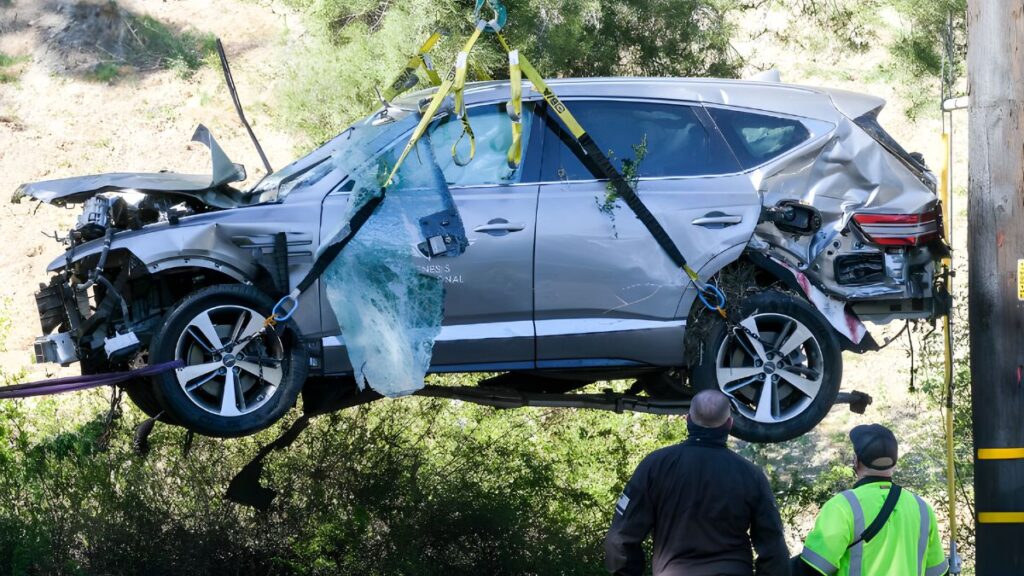
Crash Happens on Familiar Jupiter Island Road
The accident took place on a two-lane road with a 30 mph speed limit, an area Woods knows well because it lies close to his Jupiter Island residence. According to the sheriff’s office, Woods traveled at a high rate of speed when he started the passing maneuver. His Land Rover made contact with the trailer and flipped the SUV onto its side. Emergency responders arrived quickly, and Woods cooperated at first with on-scene checks before officers took him into custody.
Budensiek stressed that the investigation quickly shifted focus from alcohol to possible medication-related impairment. “Mr. Woods did a breathalyzer test, blew triple zeros,” the sheriff said. “But when it came time for us to ask for a urinalysis test, he refused.” Florida law lets drivers refuse such tests, yet the refusal triggers an automatic charge and often brings administrative penalties like license suspension. Prosecutors charged Woods with DUI involving property damage and refusal to submit to a lawful test—both misdemeanors.
Sheriff Describes Scene and Clear Signs of Impairment
In his public remarks, Budensiek painted a clear picture of a cooperative but visibly affected Woods. The golfer tried to explain his recent surgeries and ongoing medical treatments to the officers, a detail that matches his well-known history of back and leg problems. Still, the sheriff made clear that the impairment looked obvious enough to justify the arrest. Officers kept Woods out of general population at the jail—a standard step for high-profile detainees to protect his safety—but they offered him no other special treatment.
The other driver, who operated a pickup truck with a trailer, walked away without injuries and received no citations. Property damage stayed limited to the two vehicles, and the crash affected no structures or bystanders. Crews cleared the scene fast and let normal traffic flow resume on the quiet island road.
Woods Faces Another Chapter in His Driving Troubles
This latest incident adds another page to Woods’ long and troubled history with driving over the past two decades. In November 2009, he drove his SUV into a fire hydrant and a tree near his Florida home after personal scandals broke, though police filed no charges then. Eight years later, in May 2017, officers arrested him for DUI in Jupiter after they found him asleep behind the wheel of his Mercedes. That case involved prescription medications and trace marijuana; Woods later pleaded guilty to reckless driving, completed a diversion program, and finished probation with regular drug testing.
The most serious crash hit in February 2021 in Rancho Palos Verdes, California. Woods’ Genesis SUV veered off a winding road, rolled multiple times, and left him with multiple open fractures in his right leg. Surgeons performed emergency operations to stabilize the bones with rods, screws, and pins. Woods spent months recovering before he returned to competitive golf. More recently, he underwent lumbar disc replacement surgery in October 2025 to fix chronic back pain and limited mobility after he also ruptured his Achilles tendon earlier that year. These physical issues have often required pain management, and Woods himself mentioned those treatments during this latest traffic stop.
At age 50, Woods still stands as one of golf’s most recognizable figures, even though he now follows a lighter competitive schedule. His 15 major championships and decades at the top of the sport have made him a global icon, but repeated health and personal setbacks continue to draw public attention.
Legal Consequences Loom in the Coming Weeks
Florida statutes treat the refusal charge as a separate violation with its own penalties. A conviction on the impairment count could bring fines, community service, mandatory substance-abuse classes, and possible license suspension. Because Woods already carries a prior DUI-related conviction from 2017, prosecutors may push for tougher penalties, although both current charges remain misdemeanors for now. No court date has been set, and Woods’ legal team has stayed silent in public.
Legal experts who follow the case point out that the zero alcohol reading and the lack of recovered substances make proving impairment more difficult. Video footage from the scene and the officers’ direct observations will likely form the heart of any prosecution. Woods’ attorneys could argue that his post-surgical condition and prescribed medications offer a legitimate medical reason, yet the refusal itself counts as a clear violation.