| Category | Details |
|---|---|
| Full Name | Kim Nam-joon (RM) |
| Date of Birth | September 12, 1994 |
| Place of Birth | Seoul, South Korea |
| Nationality | South Korean |
| Occupation | Rapper, Songwriter, Record Producer, Leader of BTS |
| Years Active | 2010 – present |
| Estimated Net Worth | $50 million (as of 2026) |
| Spouse | None (Single) |
| Children | None |
| Most Known For | Leader and main rapper of BTS, solo mixtapes RM (2015) and Mono (2018), solo albums Indigo (2022) and Right Place, Wrong Person (2024), producing and writing the majority of BTS songs |
| Latest / Upcoming | BTS group comeback album and world tour (2026) |
RM of BTS has an estimated net worth of $50 million. That number comes from more than ten years of earnings built up through group work, his own solo projects, songwriting royalties, brand deals, and some careful personal investments.
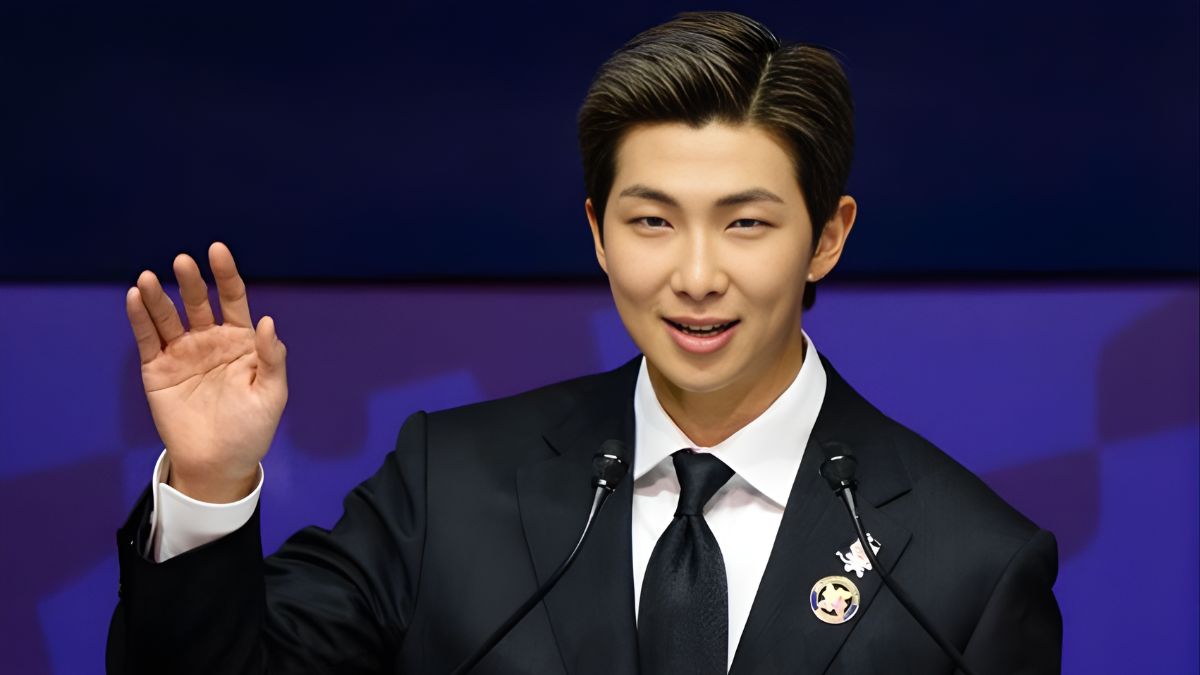
Nobody outside his inner circle knows the exact split, but the total lines up with what BTS has brought in globally and the extra weight RM carries as the main producer and lyricist. His story starts with a kid rapping in Seoul’s underground scene and ends up with him becoming one of the biggest names in K-pop. It is not some overnight miracle. It is the result of talent plus the right timing plus decisions that kept paying off.
Growing up in Ilsan
Kim Nam-joon was born on September 12, 1994, in Seoul’s Dongjak district. When he was still small his family moved to Ilsan. The suburbs gave him a calmer setting than downtown Seoul, but they never boxed in his curiosity. He read a lot and picked up languages easily, things that later fed straight into his songwriting. By the time he hit his early teens he had found hip-hop through CDs and online forums.
He started writing rhymes under the name Runch Randa and tried them out at tiny local shows. Those nights taught him how to perform and how to sharpen his flow before any company even looked his way. People who knew him back then remember a kid who kept his grades up while staying up late to write. The underground scene was small and tough, but it handed him real practice at turning personal thoughts and social gripes into verses.
Finding his way into Big Hit
When he was sixteen Nam-joon tried out for a few labels and got turned down. Then one connection changed the script. Rapper Sleepy heard him and passed his details to Big Hit Entertainment. The label’s founder, Bang Si-hyuk, liked what he saw in the quiet, sharp teenager and offered a trainee spot right away. Nam-joon said yes before he even told his parents.
He moved into the dorm and threw himself into training. He became the first male trainee at the company and spent the next three years drilling every skill. Dance practice felt awkward at first, but he stuck with it alongside vocal work and hours in front of production software. He appeared on some pre-debut tracks that would later belong to BTS. The label was still tiny and had far less money than the big players, yet the small setup let trainees actually shape the music. Nam-joon has said more than once that the tight environment gave him room to try new beats and lyrics without someone shutting the door.
Stepping into the debut spotlight
BTS officially debuted on June 13, 2013, with the single album 2 Cool 4 Skool. As the oldest member and the one who had trained the longest, Nam-joon took the leader role. He went by Rap Monster at first, a name that fit his hip-hop background but would change later. The early concept mixed hip-hop beats with pop hooks, and RM wrote most of the rap parts and helped produce. The first couple of years brought decent results inside South Korea, but plenty of industry people doubted whether a self-made group from a small label could last. RM ended up handling extra jobs translating interviews, sorting out creative arguments inside the team.
Those extra duties taught him how the business side worked and improved the way he talked to people. Album sales climbed slowly. The real shift happened when the group started writing about youth, self-doubt, and the pressure to fit in. The songs RM helped write in that stretch built the emotional link that would later turn fans into a global army.
Expanding into solo territory
Even as BTS picked up speed, RM carved out solo work that let him say things the group format could not hold. In March 2015 he dropped his first mixtape, simply called RM. The beats were raw and the lyrics dug into identity, pressure, and figuring out who he was as an artist. It landed on Billboard’s World Albums chart and caught the ear of hip-hop fans outside Korea.
Two years later he showed up on the variety show Problematic Men. His quick mind and wide range of interests surprised viewers and started to change how people saw idols. In 2018 he released the playlist Mono. It stepped away from straight rap and played more with mood and space. Both projects brought in their own money through streams and publishing, separate from BTS income. People who track music rights say that putting out solo material like this builds steady value because the artist usually keeps a bigger share than in group contracts.
BTS reaches the global stage
From 2017 onward BTS broke through on a scale that changed everything for RM’s earnings. World tours like Love Yourself and Speak Yourself sold out stadiums on several continents and pulled in hundreds of millions from tickets and merch alone. Because RM wrote or co-wrote most of the tracks, he kept collecting royalties on a catalog that now runs past two hundred songs.
The Love Myself campaign with UNICEF turned the group into cultural voices and opened bigger endorsement doors. RM spoke at the United Nations General Assembly in 2018 and again in 2021. Those moments pushed the group past music and into wider conversations. They also raised his own profile, which led to brand deals in electronics, cars, and fashion. At the same time BTS kept topping charts worldwide, so mechanical and performance royalties kept flowing in from every corner.
Solo albums that stand on their own
RM put out his first proper studio album, Indigo, in December 2022. He brought in guests like Erykah Badu and Anderson .Paak, and the record hit number three on the Billboard 200—the highest spot any Korean solo artist had reached at that time. The whole project showed he had grown comfortable moving between genres as a producer. In May 2024, while he was still doing military service, he released Right Place, Wrong Person.
It opened at number five on the Billboard 200 and went double platinum in Korea in a matter of weeks. Reviewers pointed out how it leaned into alternative sounds and looser structures. Both albums added fresh money through sales, streams, and publishing. They also proved he could carry a career on his own when BTS took breaks. Streaming numbers for those tracks stay steady long after release, which gives him the kind of reliable passive income most artists only dream about.
Building assets beyond music
RM’s money does not all sit in music royalties. Like the rest of BTS he owns shares in HYBE, the company that owns Big Hit Music. Current estimates put his holding at about 21 billion won, which works out to roughly fifteen million dollars depending on the share price on any given day. He also owns property in Seoul’s higher-end neighborhoods, including an apartment in The Hill district that cost several million dollars. What stands out more is his art collection. Over the years he has picked up more than a hundred pieces, mixing Korean works with international names.
One sculpture alone was reported at 1.2 million dollars. The collection is clearly a personal interest, but it also sits in an asset class that tends to hold or grow in value. Art-market watchers say high-quality contemporary works owned by visible collectors usually appreciate at a steady pace. He has put money into cultural projects too, though those read more as giving back than pure investment.
Contributions that extend influence
RM has quietly directed part of his earnings toward causes he believes in. He has given sizable amounts to the National Museum of Modern and Contemporary Art in Seoul so they can send books and materials to libraries and schools. Other donations went to restoring Korean cultural sites overseas and supporting language programs. In 2024 he added 100 million won to a fund that helps veterans, police, and firefighters. These moves fit with the group’s wider record of giving, including the one-million-dollar contribution to Black Lives Matter efforts in 2020. People who study entertainment finance say that steady, visible support like this strengthens an artist’s connection with fans and can make socially minded brands more willing to work with him.
Life after military service
RM finished his mandatory military duty and was discharged on June 10, 2025. The time away from the spotlight still let him put out solo music and prepare for the group’s return. Now that all seven members are back, expectations in the industry point to new releases and tours ahead. RM’s track record of steering creative choices during earlier breaks suggests he will keep playing that role. His net worth should keep rising as old royalties stack up and new projects roll out. Observers who have followed K-pop for years point out that members who keep strong solo brands usually end up with the most stable finances once group work slows down.
The bigger picture
RM’s path shows what happens when early dedication to craft meets group success and smart personal moves. From freestyling in Ilsan to standing on UN stages and buying million-dollar art, each stage fed the next. The $50 million net worth comes from years of steady output and choices that added up. As BTS heads into whatever comes next, RM’s solo catalog and investment choices give him a solid base for whatever he decides to do. The next few years will show how he balances group work with his own ideas, but the groundwork he has laid looks built to last.