| Category | Details |
|---|---|
| Full Name | Earvin “Magic” Johnson Jr. |
| Date of Birth | August 14, 1959 |
| Place of Birth | Lansing, Michigan, United States |
| Nationality | American |
| Occupation | Former professional basketball player, businessman, philanthropist, sports executive |
| Years Active | 1979 – present |
| Estimated Net Worth | $1.6 billion (as of 2026) |
| Spouse | Earlitha “Cookie” Johnson (married since 1991) |
| Children | Three (Andre, Earvin III, Elisa) |
| Most Known For | Point guard for the Los Angeles Lakers, five-time NBA champion, three-time NBA MVP, HIV/AIDS awareness advocate |
| Latest / Upcoming | Majority stakeholder in EquiTrust Life Insurance; minority owner of Washington Commanders (NFL), Los Angeles Dodgers (MLB), Los Angeles Sparks (WNBA); ongoing philanthropy via Magic Johnson Foundation |
Earvin Magic Johnson Jr. was born on August 14, 1959, and today holds a net worth of $1.6 billion. The former Lakers point guard turned businessman built that figure through smart moves after his playing days ended.
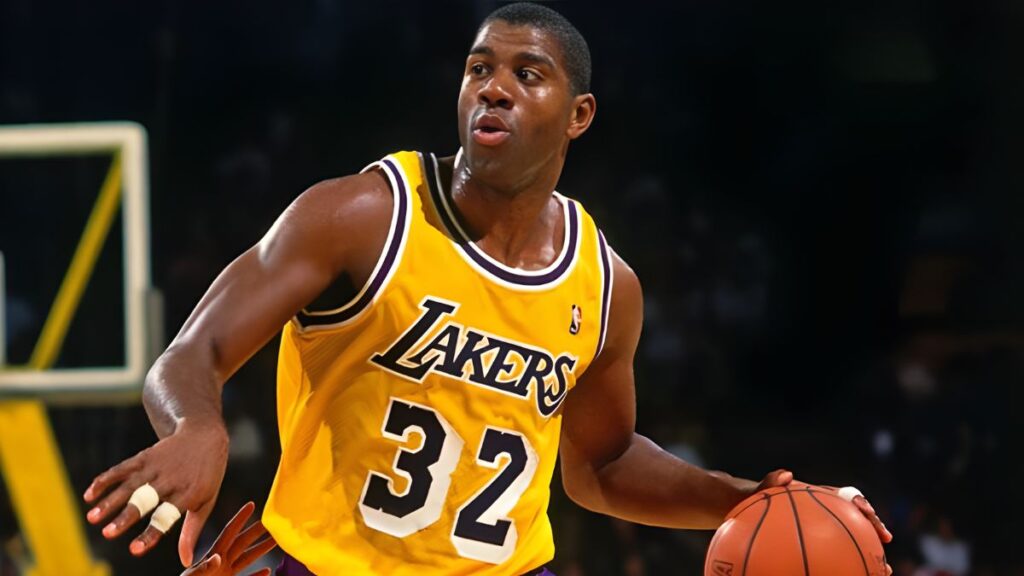
His path started in a working-class Michigan neighborhood and moved through college titles, five NBA championships, a sudden health crisis, and then decades of calculated investments. The numbers tell part of the story, but the choices along the way show how one athlete kept finding ways to stay relevant long after the final buzzer.
Roots in Lansing
Johnson grew up in Lansing, Michigan, as one of ten children in a household where both parents worked long hours. His father handled assembly at General Motors and took extra jobs collecting garbage and doing janitorial work. His mother cleaned school buildings and still made time each night to cook meals and keep the house in order.
Johnson often joined his father on those early-morning routes, learning the value of showing up no matter what. The family attended Seventh-day Adventist services, and the emphasis on discipline stuck with him.
At Everett High School, Johnson stood out right away. As a sophomore he posted 36 points, 18 rebounds, and 16 assists in one game. A local sportswriter struggled to describe the performance and started calling him Magic. By his senior year the team went 27-1, won the state title in overtime, and Johnson averaged nearly 29 points plus 17 rebounds. He earned All-State honors three times and landed on national high-school All-American lists.
The experience of busing to a mostly white school brought early lessons in handling tension and talking across differences, skills that later helped in boardrooms.
College Success at Michigan State
Johnson picked Michigan State because it was close to home and the coach promised him the point guard spot. He arrived in 1977 and wasted no time. As a freshman he put up 17 points, eight rebounds, and seven assists per game while leading the
Spartans to the Big Ten title. The next season he improved to 17.1 points, 7.6 rebounds, and 7.9 assists. The 1979 NCAA final against Indiana State and Larry Bird drew the biggest television audience in college basketball history. Michigan State won 75-64, Johnson took Final Four Most Outstanding Player honors, and the Spartans retired his number 33.
Those two seasons sharpened his court vision and passing. He left after sophomore year ready for the pros, but the college run gave him confidence that translated directly to the NBA. The rivalry with Bird also set up years of intense matchups that defined the league.
Entering Professional Basketball
The Lakers selected Johnson first overall in the 1979 draft. He stepped into a roster built around Kareem Abdul-Jabbar and immediately started all 77 games. His rookie numbers came in at 18 points, 7.7 rebounds, and 7.3 assists. The team finished 60-22 and reached the Finals against Philadelphia. In Game 6 Johnson played every position after Abdul-Jabbar missed the contest with an ankle injury. He finished with 42 points, 15 rebounds, and seven assists, clinched the title, and became the first rookie ever named Finals MVP.
That performance set the tone. Johnson brought size, speed, and flair to the point guard role in a way few had seen. The Lakers began a stretch that turned them into one of the most entertaining teams in league history.
Rookie Season Triumph
The 1979-80 season ended with a championship, but Johnson still had to prove he could carry the load night after night. He made the All-Star team as a starter and earned All-Rookie honors. The Lakers organization noticed how quickly he connected with teammates and fans. The city embraced the new energy, and ticket sales climbed. Johnson later said the rookie year taught him to prepare for every possibility, a habit that carried into business planning years afterward.
Building Momentum Through the 1980s
Injuries hit in 1980-81. Johnson missed 45 games with knee cartilage damage but returned strong enough to lead the league in steals. The Lakers still fell in the first round. The next season brought a new contract worth $25 million over 25 years. A coaching change created some noise, yet Johnson kept producing 18.6 points and 9.5 assists while leading the league in steals again. The team won another title, and he collected his second Finals MVP.
By 1982-83 he averaged 16.8 points and led the NBA in assists. The Lakers reached the Finals but lost to Philadelphia. The following year the front office traded a key guard to give Johnson more freedom with the ball. He responded with 17.6 points and 13.1 assists per game. The Finals went to seven games against Boston before the Celtics won.
The 1984-85 rematch ended differently. Johnson put up 18.3 points and 12.6 assists. The Lakers beat Boston in six games for their third title of the decade. Two more championships followed in 1987 and 1988. Johnson earned league MVP in 1987, 1989, and 1990. He led the league in assists four times during that stretch and posted 138 triple-doubles over his career. The Lakers won 50 or more games in most of those seasons and became known for fast breaks that filled arenas.
The Championship Years
Five titles in nine seasons marked the Lakers dynasty. Johnson played in every Finals series the team reached. He posted triple-doubles in key playoff games and set records for assists in Finals contests.
The partnership with Abdul-Jabbar and later James Worthy created a core that opponents struggled to match. Johnson also made 12 All-Star appearances and won two All-Star MVP awards. Those numbers reflect more than talent. They show how he adjusted his game each year to fit new teammates and coaching styles while still leading the offense.
HIV Announcement and Its Aftermath
On November 7, 1991, Johnson called a news conference and announced he had tested positive for HIV. He retired immediately. The statement shocked the league and the public.
At the time, many viewed the diagnosis as a death sentence. Johnson decided to use the moment to speak openly about testing and prevention. He appeared on national television and met with players to explain how the virus spreads. The move shifted conversations around the disease and encouraged more people to get tested.
He stayed connected to basketball through the 1992 All-Star Game. Fans voted him in, and he scored 25 points while earning MVP honors. Some teammates raised concerns about returning to the court, so he stepped away again after that weekend. The experience taught him how quickly public perception can change and how important clear communication becomes when stakes are high.
Brief Returns and New Roles
Johnson tried a comeback in 1996 at age 36. He played 32 games as a power forward, averaging 14.6 points and 6.9 assists. The Lakers reached the playoffs but lost in the first round. He recorded one final triple-double before retiring for good. The short return reminded fans of his passing ability even as his body had changed.
In 1994 he served as interim coach for the Lakers and posted a 5-11 record. The stint showed he understood the game from the sideline but also confirmed his interest lay elsewhere. He moved into broadcasting and appeared on talk shows, keeping his name in front of audiences while he built the next phase of his work.
Shifting to Business Ventures
Johnson started Magic Johnson Enterprises in 1987 while still playing. The company focused on partnerships that brought services to neighborhoods that many brands overlooked. One early deal involved a joint venture with Starbucks. He opened dozens of locations in urban areas across the country. The stores performed well, and he sold his stake about a decade later for a solid return.
He also developed a chain of movie theaters in major cities. The venues featured first-run films and created local jobs. Those projects demonstrated how he looked for gaps in the market and filled them with practical investments rather than chasing trends.
Expanding Through Ownership Stakes
Johnson bought a small percentage of the Lakers in the 1990s and later sold it at a profit. In 2012 he joined a group that purchased the Los Angeles Dodgers for $2 billion. His share gave him exposure to baseball revenue streams.
He added minority stakes in the Los Angeles Sparks of the WNBA and Los Angeles FC of Major League Soccer. In 2023 he took part in the purchase of the Washington Commanders for more than $6 billion. Each move added another layer of diversified income.
The biggest piece of his current wealth sits in EquiTrust, a life insurance company. Johnson holds a 60 percent stake that he took control of around 2015. Since then the firm’s assets under management grew from $16 billion to $27 billion.
That expansion accounts for most of the $1.6 billion net worth figure reported by Forbes in early 2026. The insurance business provides steady cash flow and shows how Johnson moved beyond sports into sectors that reward patience and scale.
Philanthropy Efforts
In 1991 Johnson created the Magic Johnson Foundation. The group started with a focus on HIV education and prevention. It has since provided more than 40,000 free HIV screenings nationwide. Over time the foundation added programs for education and community leadership.
It runs scholarship initiatives that have helped hundreds of students from urban areas attend college. The foundation also awards grants to local organizations working on health and social services. These efforts grew out of Johnson’s own health experience and his desire to give back in the same neighborhoods where he first learned the value of hard work.
Personal Life and Family
Johnson married Earlitha Cookie Kelly in 1991. The couple has one son, Earvin III, and an adopted daughter, Elisa. Johnson also has an older son, Andre, from a previous relationship. The family keeps a home in Beverly Hills and spends time at a vacation property in Dana Point. Johnson has spoken about how his faith and family kept him grounded during the height of his playing career and the challenges that followed.
Looking at the Full Picture
Johnson’s career numbers stand out: 17,707 points, 10,141 assists, and five championships. Yet the real story sits in how he kept moving forward after 1991. The HIV diagnosis could have ended everything, but instead it opened doors to advocacy and business.
The same court vision that once found open teammates now spots market opportunities in underserved communities. The growth in EquiTrust assets did not happen by accident. It came from choosing stable industries and holding positions long enough for value to compound.
His ownership in multiple sports teams shows another pattern. Rather than collect trophies, he invested in franchises that generate ongoing revenue. The movie theaters and Starbucks locations followed the same logic of creating real jobs and steady income streams.
Those choices reflect an understanding that success after basketball required the same preparation he once put into film study and practice.
At 66 years old Johnson still appears at Lakers games and foundation events. The $1.6 billion net worth marks financial achievement, but the path from Lansing streets to billion-dollar insurance portfolios offers a clearer view of how one person turned early discipline into lasting results.
The assists he once racked up on the court now show up as partnerships and community programs that continue to run. That kind of continuity explains why the journey remains worth following even after the playing career ended.