The Academy did not overthink it this time. After Conan O’Brien handled the 2025 show in the middle of those awful Los Angeles wildfires, they just asked him back. March 15, 2026, rolled around and there he was again at the Dolby Theatre, stepping out for his second straight year. The crowd knew what to expect. So did the people watching at home. He kept the pace moving, tossed in some quick jabs, and let the films take center stage most of the night. It was not flawless, but it felt steadier than a lot of recent ceremonies.
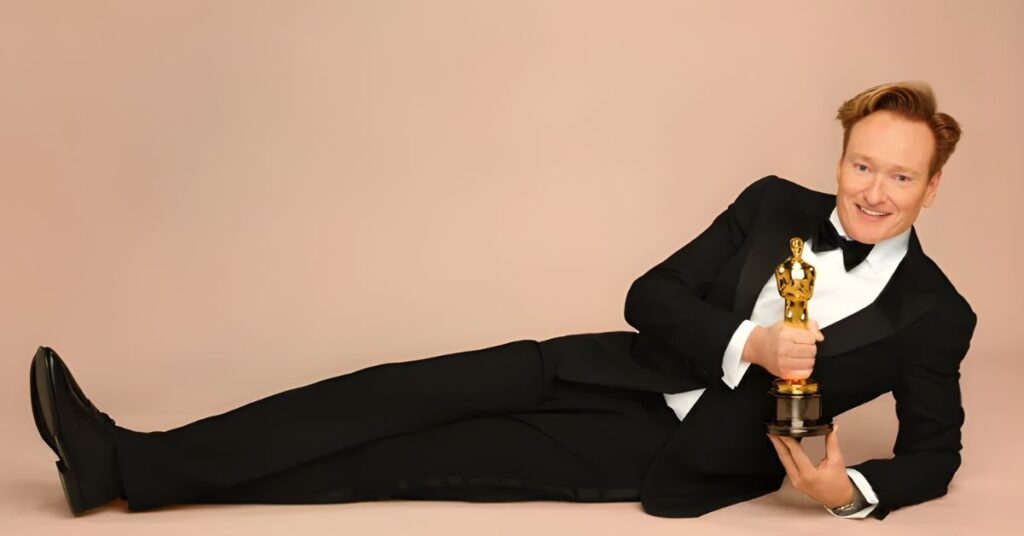
Plenty of folks wondered why the Academy would bring the same guy back so soon. Hosting the Oscars is usually a one-and-done kind of gig. But after last year’s numbers held up okay and the reviews landed mostly positive, the decision made sense on paper. Conan had already shown he could walk the tightrope between poking fun at the industry and showing some real respect for the work. This time around the room seemed a little more relaxed. Maybe it was the familiarity. Or maybe it was just that he had done the homework twice.
Conan’s Long Road From Harvard to the Late-Night Desk
Conan O’Brien did not wake up one morning and decide to host the Oscars. The guy has been grinding in comedy for decades. Born in Brookline, Massachusetts, in 1963, he came from a big Irish Catholic family. He went to Harvard, studied history and literature, and somehow ended up running the Harvard Lampoon twice. That is not common. After graduation he headed to Los Angeles and landed a writing job on HBO’s Not Necessarily the News. From there it was a short hop to Saturday Night Live in 1988.
At SNL he wrote for three seasons and created characters that still get mentioned today. Mr. Short-Term Memory was one of his. The show picked up an Emmy for writing while he was there. In 1991 he jumped to The Simpsons for two years as a writer and producer. That stretch taught him how to layer absurdity into everyday stuff without losing the audience. By 1993 NBC picked him to take over Late Night when David Letterman left for CBS. Critics ripped him apart at first. He looked awkward on camera, the jokes did not always land, and the network kept renewing the show in tiny 13-week chunks. Cancellation rumors followed him everywhere.
Still, the audience stuck around. Over 16 years Late Night with Conan O’Brien built a cult following. The bits got sillier, the remote segments got wilder, and the house band with Max Weinberg became part of the furniture. Triumph the Insult Comic Dog turned into a star. Writers like Louis C.K. and Bob Odenkirk came through the room. The show racked up Emmy nominations even when the ratings were not setting records. Then came the Tonight Show mess in 2009. NBC handed Conan the desk after Jay Leno stepped aside, but the whole arrangement fell apart in seven months. Affiliates complained, ratings slipped, and the network tried to shuffle everyone around. Conan walked instead. The public blow-up turned him into an accidental hero. Fans launched Team Coco campaigns online and the drama forced him to rethink everything.
He landed at TBS with Conan in 2010 and kept the show running until 2021. The format felt looser. He did more international travel specials and let the energy shift away from the old studio formula. When that chapter closed he moved into podcasting with Conan O’Brien Needs a Friend in 2018. The conversations went longer and felt more like actual talks than performances. Later he launched the travel series Conan O’Brien Must Go, which gave him fresh material and a break from the nightly grind. All of that background mattered when the Academy first came calling for 2025. He had never hosted the Oscars before, but he had done the Emmys a couple of times and understood the live pressure. His mix of self-deprecation and crowd work gave the show a different flavor from the usual polished deliveries.
Why the Academy Went With the Safe Bet This Year
Oscars producers have spent years trying to figure out how to keep people watching. Hostless nights in 2019 and 2020 got mixed reactions. Jimmy Kimmel’s runs brought steady numbers but some people called them too safe. When Conan stepped in for 2025 he brought a looser energy. He mixed real affection for the movies with jokes that poked at the whole process. The show caught some flak for tonal shifts, but most critics gave him credit for keeping things from dragging.
The move was not exactly revolutionary. Producers liked that he knew the room and that his material reached both older viewers and younger ones who clipped videos the next day. It also cut down on risk. A familiar host meant shorter rehearsal time and fewer surprises in the script. Conan had already proven he could handle tough timing, like nodding to the wildfires last year without killing the mood. This time the approach carried over, just with a bit more confidence from round one.
Conan’s repeat booking felt like a quiet test. Could a steady presence help in an era when streaming clips and short videos pull attention in every direction? Industry folks watched closely to see if the gamble paid off.
The Dolby Theatre: Built for This Night and Nothing Else
The venue itself carries its own weight. The Dolby Theatre sits inside the Ovation Hollywood complex and has been the Oscars home since 2002, except for the 2021 pandemic year when everything moved to Union Station. Architects designed it from the ground up with the Academy Awards in mind. David Rockwell led the project, focusing on sight lines, acoustics, and the practical needs of a live television broadcast.
When it opened in 2001 as the Kodak Theatre it cost $94 million. The 3,300-seat space included a stage built for big productions, room for an orchestra, and camera positions that let directors switch looks without scrambling. Dolby Laboratories took over the naming rights in 2012 after Kodak went bankrupt. The theater still delivers on the original plan. The audience sits close enough that a host can read reactions in real time. Backstage moves fast during commercial breaks, which helps writers tweak material on the fly.
For Conan the Dolby offered practical advantages. He could play off the crowd without losing the camera angles. In 2026 security was tighter because of wider world events, and he made a light joke about it early on. The place has become so linked to the Oscars that returning there feels routine, even though every year brings new headaches. The setup lets the show breathe a little. Presenters can move naturally. The lighting rig changes moods between segments. It is not flashy, but it works.
How Conan Prepared for Round Two
Conan did not phone this one in. In the weeks before March 15 he hit small comedy clubs around Los Angeles, sometimes without any announcement. He tested monologue lines in front of crowds that had no clue he would show up. Some nights the rooms were half bowling alley, half comedy spot. The exercise helped him figure out what actually landed.
He watched every nominated film more than once. Writers built pre-taped pieces that could drop in if the live show needed a reset. Rehearsals at the Dolby zeroed in on timing and camera moves. By show night he looked more at ease than he had in 2025. The team had learned from the previous year too. They tightened transitions and dropped bits that had not worked before. The prep showed in small ways. Pauses felt natural. The flow rarely stumbled.
Inside the 2026 Show: Sketches, Monologue, and Everything in Between
The night kicked off with a pre-taped sketch that set a silly tone right away. Conan showed up in full makeup as Aunt Gladys, the clownish villain from Weapons, which had landed Amy Madigan a supporting actress nod. He ran through quick scenes from several best-picture nominees while the Beastie Boys’ Sabotage played underneath. The bit mixed physical comedy with movie clips and got the crowd laughing early.
Once he hit the stage the monologue moved fast. He called himself the last human host and joked that next year a self-driving car in a tux might take over. Artificial intelligence came up a few times. He ribbed Timothée Chalamet’s recent comments on the fine arts and took a light swing at Netflix’s Ted Sarandos. A quick line about how everything felt calmer this year after the wildfires drew a knowing chuckle. Some jokes hit bigger than others, but the delivery stayed even.
He kept the energy steady all night. When winners walked up he offered quick congrats and moved things along. A couple of long speeches tested the pace, but he smoothed over the awkward spots. One pre-taped bit aimed at younger viewers used a popular mobile game reference. It did not connect with everyone, but the structure held. Musical performances, tributes, and presenter appearances filled the rest of the evening. Conan’s job was to keep the train on the tracks between the big moments.
How Critics and Audiences Reacted the Next Day
Reviews landed mostly positive. Outlets called the 2026 show livelier and funnier than the year before. The writing felt sharper. The cold open got praise for its creativity and the monologue for balancing current events with movie love. A few writers said some bits felt familiar or that the tone drifted in places. Online the reaction split along usual lines. Clips of the opening sketch and certain one-liners spread fast. Younger viewers liked the pop-culture nods. Older fans appreciated the return to a host who seemed to enjoy the gig. A handful of commentators wondered if the material played it too safe.
The Numbers and What They Actually Mean
Early estimates put viewership at about 17.9 million. That was down roughly nine percent from 2025. The drop fit the bigger trend. Streaming options and other live events keep chipping away at traditional broadcasts. Still, the numbers stayed above some recent lows. The Academy pointed to strong digital clips and social engagement as a partial win. Every host faces the same question now: did the show stop the slide or just slow it? Conan’s return suggested the Academy was betting on familiarity instead of chasing a viral breakout. Whether that works long term is still up in the air. Some executives think a consistent host could build its own brand. Others worry repeating the same face might limit new ideas.
Looking Back at Hosts Who Came Before
Hosting the Oscars has never been easy. Bob Hope set the bar with 19 appearances spread from 1940 to 1978. He mixed show-business gossip with gentle self-mockery and made it look effortless. Billy Crystal followed decades later with nine turns between 1990 and 2012. He brought musical numbers and film parodies that became yearly traditions. Whoopi Goldberg mixed stand-up with sharper commentary. Jimmy Kimmel leaned into political humor and direct audience work.
Conan sits somewhere in the middle. He avoids heavy politics and focuses on the movies, the industry quirks, and his own awkwardness. That approach helped him navigate last year’s tough context and kept 2026 from tipping into controversy. It also drew complaints from people who wanted more edge. The balance reflected what the Academy seems to want right now: entertainment that does not alienate the worldwide audience or the talent sitting in the seats.
What This Repeat Booking Might Signal for the Future
Bringing Conan back opened up bigger questions. Could the Oscars settle into a longer run with the same host the way some other awards shows have? Or will the Academy keep rotating talent to stay fresh? Conan has hinted in interviews that he likes the challenge but knows no one person can carry the night forever.
For now the 2026 ceremony stands as a case of steady improvement. The host knew the venue, the format, and the expectations. The show moved at a decent clip and gave the nominated films their due. Whether that formula lasts will depend on how the industry keeps changing and how viewers respond to future broadcasts. The Dolby Theatre will almost certainly stay the backdrop. The red carpet will roll out again next March. And the endless debate about what makes a successful Oscars telecast will keep going.
Conan O’Brien’s second time showed that sometimes the safest choice is the one who already knows the stage. The rest of the night, as always, belonged to the winners and the movies that put them there. The industry will keep watching to see if familiarity can hold the line against all the other noise pulling people away.