| Category | Details |
|---|---|
| Full Name | William Albert Ackman |
| Date of Birth | May 11, 1966 |
| Place of Birth | Chappaqua, New York, United States |
| Nationality | American |
| Occupation | Hedge fund manager, activist investor, founder and CEO of Pershing Square Capital Management |
| Years Active | 1992 – present |
| Estimated Net Worth | $8.9 billion (as of 2026) |
| Spouse | Neri Oxman (married since 2019); Karen Herskovitz (married 1994–2018) |
| Children | Four |
| Most Known For | Founder of Pershing Square Capital Management, activist campaigns including the Canadian Pacific Railway turnaround, Herbalife short position, and 2020 pandemic market hedge |
| Latest / Upcoming | Managing around $20 billion in assets with major holdings in Uber, Amazon, Alphabet, and Meta; continued public commentary on university policies and market strategies |
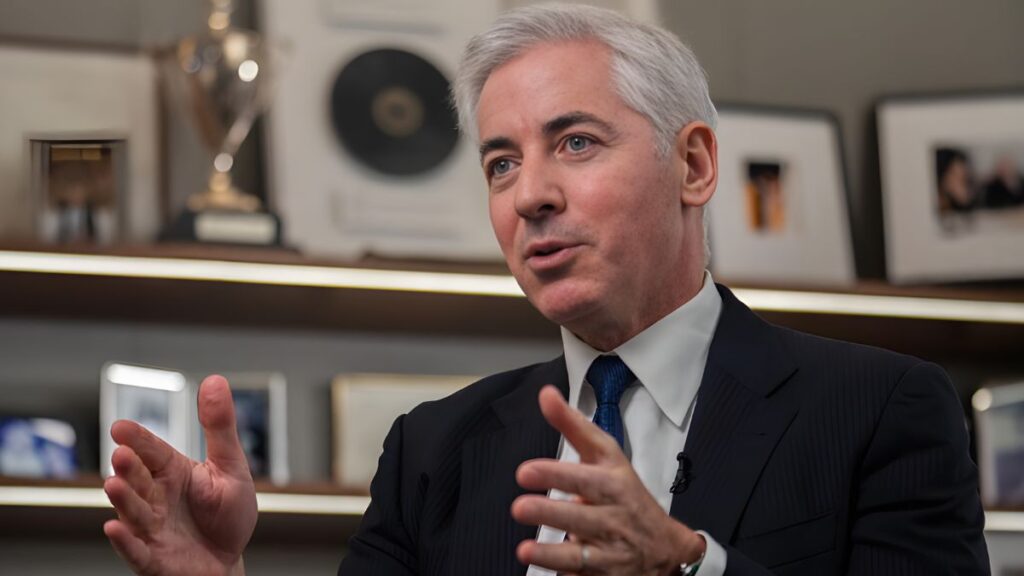
Bill Ackman has a net worth of $8.9 billion. The hedge fund manager built this fortune over more than three decades by placing large bets on a small number of companies and often stepping in to push for changes at the top. His path includes clear highs and lows that tested his methods and forced adjustments along the way.
Early Life in Chappaqua
William Albert Ackman was born on May 11, 1966, in Chappaqua, New York. His father, Lawrence D. Ackman, ran a real estate financing firm, and his mother, Ronnie I.
Ackman, came from a similar professional background. The family lived in an affluent area outside New York City, where real estate and business discussions formed part of daily life. Ackman attended Horace Greeley High School and graduated in 1985.
Those years gave him an early look at how markets and property values worked, though he showed no immediate plan to follow his father into brokerage. Instead, he focused on academics and sports, including tennis, which he continued playing at a competitive level later in life.
Harvard Education
Ackman enrolled at Harvard College after high school. In 1988 he earned a Bachelor of Arts degree magna cum laude in social studies. His senior thesis examined Harvard admissions policies and drew comparisons between earlier restrictions on Jewish students and later ones affecting Asian American applicants.
The work reflected an interest in institutional structures and fairness, topics that later surfaced in his public comments on universities. After graduation he moved straight to Harvard Business School and completed an MBA in 1992. The business program sharpened his analytical skills and introduced him to value investing ideas that shaped his future funds.
During those years he also spent time at his family’s real estate investment banking firm, Ackman Brothers and Singer, where he handled initial deals and learned the mechanics of financing.
Starting Out with Gotham Partners
Right after business school Ackman teamed up with fellow Harvard graduate David P. Berkowitz to launch Gotham Partners in 1992. The firm began with modest capital and focused on small stakes in public companies. Research drove every decision, and the pair looked for situations where the market had mispriced assets or where management could improve operations.
By the mid 1990s Gotham had grown steadily. In 1995 Ackman joined forces with Leucadia National to bid on Rockefeller Center, a high profile effort that drew attention even though it did not succeed. The visibility helped attract more investors, and assets under management reached roughly $500 million by 1998.
Returns stayed in double digits for much of the decade as the firm bought undervalued stocks and occasionally took activist steps to unlock value.
Building and Closing Gotham
Gotham continued to expand through the late 1990s, but challenges appeared by the early 2000s. Liquidity issues and regulatory pressures mounted, and some positions proved harder to exit than expected.
Ackman also ran into a public dispute with Carl Icahn over a stock sale, which ended in a lawsuit and a settlement years later. By 2003 the firm wound down its operations. The closure stung, yet Ackman used the period to conduct deep research on companies like the bond insurer MBIA.
He gathered thousands of pages of documents through subpoenas and questioned the firm’s AAA rating from rating agencies. That work laid groundwork for later trades. The Gotham years taught him the importance of thorough due diligence and the risks of holding too many illiquid positions at once.
Founding Pershing Square
In 2004 Ackman started fresh with Pershing Square Capital Management. He raised $54 million from personal funds and support from Leucadia National. The new firm adopted a concentrated approach, typically holding fewer than a dozen positions at any time.
Ackman aimed to invest in businesses he understood deeply and to engage directly with boards when needed. Early efforts included a stake in Wendy’s International, where Pershing Square supported the spin off of Tim Hortons through an initial public offering.
The move generated returns for investors and showed how targeted pressure could lead to strategic shifts. Pershing Square operated as a private hedge fund at first, with Ackman as CEO and portfolio manager. The structure allowed flexibility to hold positions for years if the thesis remained intact.
First Major Moves
Pershing Square gained traction in the years after launch. One notable success came with General Growth Properties, a mall operator that filed for bankruptcy protection during the 2008 financial crisis.
Ackman bought a stake when others avoided the sector and worked with management to restructure the company. The investment turned around dramatically, delivering substantial gains once the firm emerged from bankruptcy. Around the same time Ackman executed a large short position on MBIA. He had researched the insurer for years and argued its business model faced serious risks.
The trade paid off handsomely as the financial crisis unfolded, with Ackman covering the short in early 2009. These wins helped establish Pershing Square as a firm willing to take bold stands, both long and short, when conviction ran high.
Activist Campaigns Take Shape
By the early 2010s Ackman had refined the activist playbook. In 2010 Pershing Square took an 18 percent stake in J.C. Penney and pushed for a turnaround that included bringing in new leadership. Ackman joined the board and advocated for changes, but the effort faltered as sales declined and the retail environment shifted. He stepped down from the board in 2013 after the plan did not deliver expected results.
The episode highlighted the limits of activism when market conditions or execution did not align with projections. Meanwhile, Ackman turned attention to Canadian Pacific Railway in 2011. Pershing Square became the largest shareholder and launched a proxy contest that replaced the chief executive and board members. The new team improved operations, and the stock rose sharply.
Ackman later described the outcome as one of the clearest examples of how shareholder involvement could drive efficiency in a mature industry.
High Profile Battles
Two campaigns in the mid 2010s drew intense public scrutiny. Starting in 2012 Ackman built a $1 billion short position in Herbalife, arguing the nutrition company operated like a pyramid scheme. He presented detailed research at investor conferences and funded independent investigations.
Carl Icahn took the opposite side, buying shares and turning the dispute into a very public feud. The stock price fluctuated wildly, and the short ultimately closed in 2018 at a loss after years of litigation and regulatory reviews. Around 2015 Pershing Square invested heavily in Valeant Pharmaceuticals. Ackman saw potential in the company’s acquisition strategy and pricing model, but regulatory scrutiny and business practices led to a steep decline.
Pershing Square sold its remaining shares in 2017, recording losses that exceeded $4 billion in total across the position. Those two episodes marked the toughest stretch for the firm, with returns turning negative and investor pressure rising.
Recovery and New Focus
After the setbacks Ackman adjusted the strategy. The firm reduced reliance on short positions and emphasized long term holdings in durable businesses. Investments in Chipotle Mexican Grill began in 2016, and Pershing Square later supported the hiring of a new CEO who helped restore growth.
The stake became one of the top performers in the portfolio. In 2020, as markets dropped sharply at the start of the pandemic, Ackman purchased credit default swaps for a small premium. The hedge generated more than $2.6 billion in profit within weeks, which the firm reinvested into equities at depressed prices. The move stood out for its timing and scale, adding significantly to returns that year.
Pershing Square also launched a publicly traded vehicle, Pershing Square Holdings, which allowed broader access to the strategy while keeping the core portfolio concentrated.
Recent Holdings and Performance
In the years that followed, Ackman maintained a handful of large positions. The portfolio has included stakes in Uber, Brookfield Corporation, Amazon, Alphabet, and Meta Platforms.
These companies share traits that fit the firm’s criteria: strong cash generation, competitive advantages, and potential for operational improvements. Pershing Square Holdings delivered solid gains in 2025, contributing to the rise in Ackman’s personal net worth. The firm now manages around $20 billion in assets and continues to operate with low turnover.
Ackman stepped back from some board roles, including at Howard Hughes Holdings after years as chairman, though he later rejoined in an executive capacity when the stake increased. The shift away from frequent activism reflects a view that many businesses can compound value over time without constant intervention.
Philanthropy and Public Voice
Outside of investing Ackman has directed resources toward charitable work. He and his first wife co founded the Pershing Square Foundation in 2006 to support education, health, and urban development projects. The foundation has committed hundreds of millions of dollars to organizations focused on scalable impact.
Ackman signed the Giving Pledge, committing to donate at least half his wealth during his lifetime. In recent years he has spoken out on university policies, particularly after events in 2023, and criticized approaches to campus protests and admissions practices.
His comments on social media and in interviews often spark debate, yet they stem from the same analytical style he applies to companies. Ackman has four children: three from his first marriage to Karen Herskovitz, which ended in divorce in 2018, and one with his second wife, Neri Oxman, whom he married in 2019.
What the Record Shows
Ackman’s career demonstrates the power and the pitfalls of concentrated investing. Large positions allow for deep engagement and potential for outsized returns when analysis proves correct, as seen with Canadian Pacific and the pandemic hedge.
At the same time, the approach leaves little room for error when a single thesis encounters unexpected resistance, which happened with Herbalife and Valeant. Over time the firm adapted by tightening risk controls and focusing more on businesses with predictable cash flows.
Performance since the mid 2010s recovery has outpaced broad market indexes in several periods, even with fewer activist campaigns. The net worth figure of $8.9 billion reflects ownership in Pershing Square and the compounding effect of successful trades, offset by the costs of past mistakes.
Investors who stayed with the fund from its early days have seen strong long term results despite the volatility. Ackman has said in shareholder letters that transparency about errors matters as much as celebrating wins, a stance that has helped rebuild confidence after difficult years.
Looking at the Path Forward
Pershing Square today operates with a more permanent capital base and a portfolio geared toward long duration growth. Recent moves, such as adding stakes in technology and infrastructure names, suggest continued emphasis on companies that can benefit from structural trends.
Ackman remains involved in day to day decisions, though the team has grown and processes have become more structured. The public trading of Pershing Square Holdings has introduced new shareholders who track performance through share price and net asset value discounts. Market conditions will continue to test the strategy, yet the core idea of backing high quality businesses and acting when value diverges from price has defined the journey from Gotham through the current era.
The $8.9 billion net worth stands as one measure of that persistence, alongside the lessons drawn from both the gains and the losses that shaped decisions over thirty years.