| Category | Details |
|---|---|
| Full Name | Peter “Pete” Sampras |
| Date of Birth | August 12, 1971 |
| Place of Birth | Washington, D.C., United States |
| Nationality | American |
| Occupation | Former Professional Tennis Player, Businessman |
| Years Active | 1988 – 2002 |
| Estimated Net Worth | $150 million (as of 2026) |
| Spouse | Bridgette Wilson (married since 2000) |
| Children | Two (Christian Charles born 2002, Ryan Nikolaos born 2005) |
| Most Known For | 14 Grand Slam singles titles (7 Wimbledon, 5 US Open, 2 Australian Open), record 286 weeks at World No. 1, serve-and-volley style that defined 1990s men’s tennis |
| Latest / Upcoming | International Tennis Hall of Fame inductee (2007); occasional senior exhibitions and charity events, ongoing business investments in real estate and sports management, private family life in California |
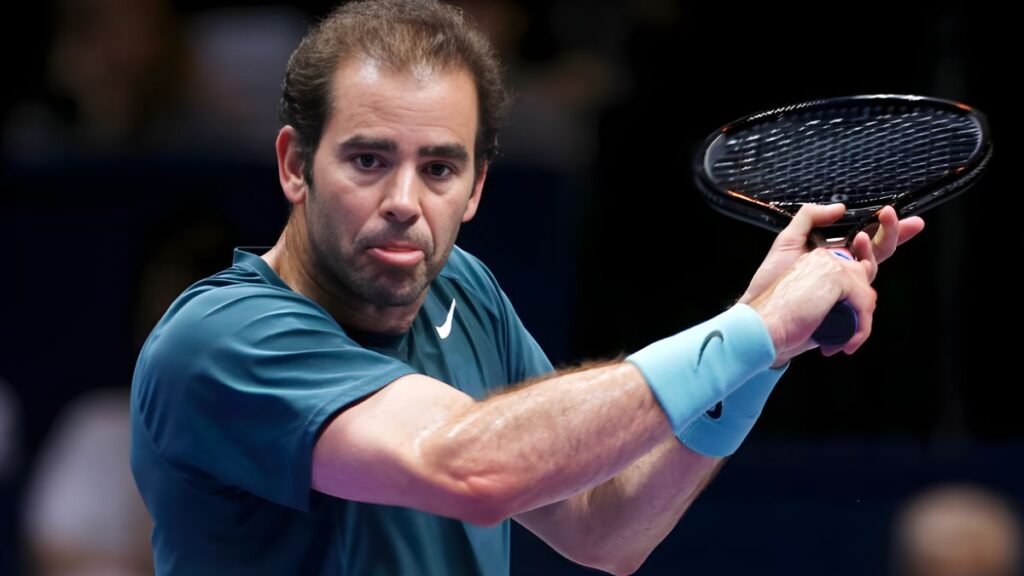
Pete Sampras has a net worth of $150 million. Born August 12, 1971, in Washington, D.C., the tennis player built that figure through prize money that reached $43,280,489 over his professional years plus long running endorsement contracts and later choices in property holdings. The path from early practice sessions in a family basement to multiple titles on grass and hard courts shows a steady focus on certain skills that fit specific tournament conditions. His career spanned the late 1980s into the early 2000s and left records that stood for some time after he stepped away from full time competition.
Birth and Family Roots
Sampras entered the world as the third child of Soterios Sammy Sampras and Georgia Vroustouris Sampras. The parents carried Greek roots on one side and mixed heritage on the other. Church services formed part of weekly life for the household. At three years old Sampras picked up a racket stored in the basement and spent hours hitting balls against the wall.
Those early sessions marked the first contact with the sport that later defined his working life. The family stayed in the D.C. area until 1978 when a move took them across the country to Palos Verdes in California. The warmer weather there let the seven year old play outdoors nearly every day. The new location opened doors to regular court time at local clubs including the Jack Kramer Club where coaches first took notice of the boy’s hand eye coordination and quick footwork.
Coaching Changes and Style Shift
A pediatrician named Peter Fischer stepped in as coach around 1980 and stayed with Sampras until 1989. Fischer had no prior experience as a full time instructor yet the partnership clicked. Under his guidance the player worked on shifting from a two handed backhand to a one handed version. The change aimed at better preparation for grass surfaces where quick net approaches mattered. At first the adjustment felt awkward and results dipped in some junior events.
Over months the single handed stroke became reliable and the overall game leaned toward serve and volley tactics. Another coach Robert Lansdorp also spent time with the young athlete and emphasized a flat forehand drive that traveled low and fast. Those technical tweaks set the stage for later success on faster courts. Sampras met his boyhood idol Rod Laver at age eleven and the two hit a few balls together. The brief encounter added motivation though the younger player already spent long hours on court.
Turning Professional
Sampras entered the professional ranks in 1988 at age sixteen. His debut match came at the Ebel U.S. Pro Indoor in Philadelphia where he lost in the first round. One week later in Miami he knocked out two ranked opponents before falling to a higher seed. Progress came slowly at first. He did not record another win over a top forty player for six months until a warm up event ahead of the U.S. Open.
In his first Grand Slam appearance he lost in the opening round at Flushing Meadows. By the end of the season his ranking stood at ninety seven after starting the year at eight hundred ninety three. The following year brought more matches and a climb to eighty one in the year end list. He reached the fourth round at the U.S. Open but lost to Jay Berger. Results on clay and grass stayed modest. The player kept working on his serve which already showed power and accuracy that would later become a signature element.
First Major Title at the U.S. Open
The 1990 season brought a sharp turn. Sampras won his initial tour title at the U.S. Pro Indoor in Philadelphia. He followed that with a run to the U.S. Open final where he faced Andre Agassi. At nineteen years and twenty eight days old he took the match six four six three six two to become the youngest male champion in the history of that tournament. Along the way he defeated Thomas Muster in the fourth round and Ivan Lendl in the quarterfinals in five sets.
The victory pushed his year end ranking to number five. He also claimed the Grand Slam Cup that year. The win at Flushing Meadows gave him confidence on hard courts and showed that his serve and volley style could hold up in best of five set formats against established names.
Building Momentum Through the Early Nineties
In 1991 Sampras reached the final of the ATP Tour World Championships but lost there. He made the quarterfinals at the U.S. Open yet the defense of his title ended earlier than expected. The next year brought another U.S. Open final appearance this time against Stefan Edberg.
Sampras fell in four sets. He did win five titles including the Cincinnati Masters and helped the United States team secure the Davis Cup. His ranking closed the year at number three. The French Open quarterfinals and Wimbledon semifinals showed mixed results on slower and quicker surfaces. The player continued to refine his approach shots and volleys which paid off on grass and indoor courts but left gaps on clay.
Peak Years Begin
The 1993 season marked the start of a stretch where Sampras held the top spot for extended periods. He captured Wimbledon for the first time by beating Jim Courier in the final. Weeks later he added the U.S. Open title with a straight sets win over Cedric Pioline.
The Australian Open ended in the semifinals and the French Open quarterfinals. On April twelfth he rose to world number one for the first time. That year he served over one thousand aces which stood as a record then. The year end ranking stayed at number one. Prize money that season contributed to the growing total that would later form part of his overall earnings. The serve and volley game proved especially effective at Wimbledon where points ended quickly and net rushes limited return opportunities.
Continued Success in 1994 and 1995
Sampras opened 1994 with an Australian Open title over Todd Martin. He repeated at Wimbledon against Goran Ivanisevic. The French Open quarterfinals again highlighted the challenge on clay while the U.S. Open fourth round exit came after a five set loss. Still the year end number one ranking held. In 1995 he lost the Australian Open final to Agassi but rebounded to win Wimbledon and the U.S. Open. The Wimbledon final against Boris Becker featured twenty three aces and no break points faced.
At the U.S. Open he edged Agassi in four sets with twenty four aces. Davis Cup duties that year included a five set win that left him exhausted yet the team took the trophy. His ranking remained number one at the close of the year. These back to back major wins reinforced the value of his serve on faster surfaces where opponents struggled to read the direction and pace.
Mid Nineties Challenges and Wins
The 1996 campaign included a Wimbledon quarterfinal loss but a U.S. Open title over Michael Chang. The French Open semifinals marked his deepest run there. A memorable U.S. Open quarterfinal against Alex Corretja saw him vomit from dehydration yet he saved a match point with a diving volley and won. The ATP Tour World Championships final went five sets against Becker.
Ranking stayed at number one. In 1997 Sampras took the Australian Open and Wimbledon again. He reached ten finals and lost only one. Earnings hit a career high of six million four hundred ninety eight thousand two hundred eleven dollars that season. The year end number one position extended to a fifth straight year. The rivalry with Agassi produced several high profile matches during this period and each encounter tested serve returns and baseline consistency.
Late Nineties Consistency
Sampras won Wimbledon once more in 1998 in a five set final over Ivanisevic. The Australian Open quarterfinals and U.S. Open semifinals showed solid runs. He kept the number one ranking for a sixth consecutive year. The 1999 season brought another Wimbledon title against Agassi in straight sets. A herniated disc forced him to skip the U.S.
Open and his ranking slipped to number three at year end. The player still claimed several other tournaments and maintained a long winning streak on hard courts. These years illustrated how his game held up under pressure even as newer players entered the tour. The serve remained a weapon that forced errors and created short points.
Final Major and Retirement
In 2000 Sampras secured his seventh Wimbledon title by coming back from a set down against Patrick Rafter. The U.S. Open final ended in a loss to Marat Safin. The next two seasons brought fewer titles and more early exits. At the 2002 U.S. Open he faced Agassi in the final and won six three six four five seven six four to claim his fifth title there. That victory marked his fourteenth Grand Slam overall. Shortly after the match Sampras announced his retirement from full time play.
The decision came after a career that included two hundred eighty six weeks at number one and six year end top spots. He had competed in two hundred sixty five tournaments and collected sixty four singles titles. The serve and volley approach suited the surfaces available in his prime and helped him accumulate points efficiently in key events.
Life After Competition
Sampras entered the International Tennis Hall of Fame in 2007. He took part in occasional exhibitions and senior events but kept a low schedule. Family became the main focus after retirement. He married actress Bridgette Wilson in 2000. Their first son Christian arrived in 2002 and second son Ryan followed in 2005. The couple settled in California and raised the boys away from constant public view. In 2022 Bridgette received an ovarian cancer diagnosis.
She underwent major surgery chemotherapy and maintenance therapy. Sampras spoke about the family’s private handling of the situation and the support they provided each other during treatment. The experience added a personal layer to his post playing years and highlighted the importance of health after years of physical demands on the court.
Building and Protecting Wealth
The net worth figure of $150 million stems from more than prize money alone. Endorsement deals with Nike and Wilson racquets ran for years and continued in some form after retirement. Those contracts supplied steady income that outpaced on court earnings. Sampras also directed funds into real estate holdings in California where property values rose over time.
He partnered in a sports management firm called Pure Sports Management which his brother Gus helped operate. Another involvement came through an investor role with Tennis Magazine where he offered input on content and strategy. These choices spread risk and allowed the initial earnings to grow without reliance on new tournament appearances.
The approach showed a practical side that matched the discipline seen during his playing days. Observers point out that many athletes see earnings drop sharply after retirement yet Sampras avoided that drop through targeted property buys and selective business ties.
Analysis of Career Choices
His decision to emphasize serve and volley from the mid teens onward aligned well with the grass and hard court schedules that made up a large part of the tour calendar. On those surfaces the tactic shortened rallies and reduced wear on the body over long seasons. Clay courts presented a different test and his best result there stayed at the semifinals. The choice not to alter the game for slower conditions kept the style consistent yet limited options at certain events.
The rivalry with Agassi produced twenty meetings with Sampras holding a twenty to fourteen edge overall. Those contests often turned on first serve percentages and volley accuracy rather than long baseline exchanges. The mental side of the game also played a part.
Sampras stayed focused through five set matches and handled the pressure of defending titles year after year. His record of fourteen Grand Slams stood as the mark to beat until later players surpassed it. The longevity at number one for six straight years reflected steady performance across varying conditions and opponent styles.
Family and Daily Routine
Sampras and his wife kept their home life centered on the two sons. Both boys grew up with access to courts but no pressure to pursue professional paths. The family spends time in California where the climate allows outdoor activity much like the player enjoyed as a child. Post retirement routines include light fitness sessions and occasional charity events tied to tennis. The cancer diagnosis for Bridgette shifted priorities toward medical appointments and recovery support.
The couple managed the situation without seeking media coverage beyond a brief statement. That privacy aligns with the low key approach Sampras took after leaving the tour. He has said in past interviews that the transition felt natural once family responsibilities took center stage. The years since 2002 show a clear separation between the competitive phase and the personal one.
Legacy on and off the Court
The serve that produced thousands of aces across his career set a benchmark for power and placement that later generations studied. Records for weeks at number one and consecutive year end top spots lasted until newer players extended them. The U.S.
Open wins bookended his career with the first at nineteen and the last at thirty one. That span covered more than a dozen years of high level play. Investments in property and business interests preserved the financial gains and allowed a comfortable life without constant travel. The Hall of Fame induction recognized the on court record while later activities added a layer of involvement in the sport through coaching clinics and management roles.
Sampras avoided overexposure after retirement which helped maintain a clear distinction between his playing persona and private life. The combination of athletic achievement and financial decisions produced a net worth that places him among the higher figures in the sport’s history. His path offers an example of how early technical choices technical consistency and later planning can lead to both competitive success and lasting security.