| Category | Details |
|---|---|
| Full Name | Norman Gene Macdonald (Norm Macdonald) |
| Date of Birth | October 17, 1959 |
| Place of Birth | Quebec City, Quebec, Canada |
| Date of Death | September 14, 2021 |
| Nationality | Canadian |
| Occupation | Comedian, Actor, Writer, Television Host |
| Years Active | 1985 – 2021 |
| Estimated Net Worth | $2.5 million (as of 2021) |
| Spouse | Connie Vaillancourt (married 1988, divorced 1999) |
| Children | One son, Dylan Macdonald (born 1992) |
| Most Known For | Weekend Update anchor on Saturday Night Live (1994–1997), Dirty Work (1998), The Norm Show (1999–2001), stand-up specials Me Doing Stand-Up (2011) and Hitler’s Dog, Gossip & Trickery (2017) |
| Latest / Upcoming | Norm Macdonald: Nothing Special (Netflix special, recorded 2020 and released posthumously in 2022) |
Norm Macdonald, who died on September 14, 2021, had a net worth of $2.5 million. The figure reflected decades of steady work in comedy clubs, television sketches, films, and stand-up specials. He grew up far from any spotlight and kept his personal habits simple even after fame arrived. His path showed how a comedian could stick to a certain way of delivering lines and still leave a mark without chasing every big paycheck that came along.
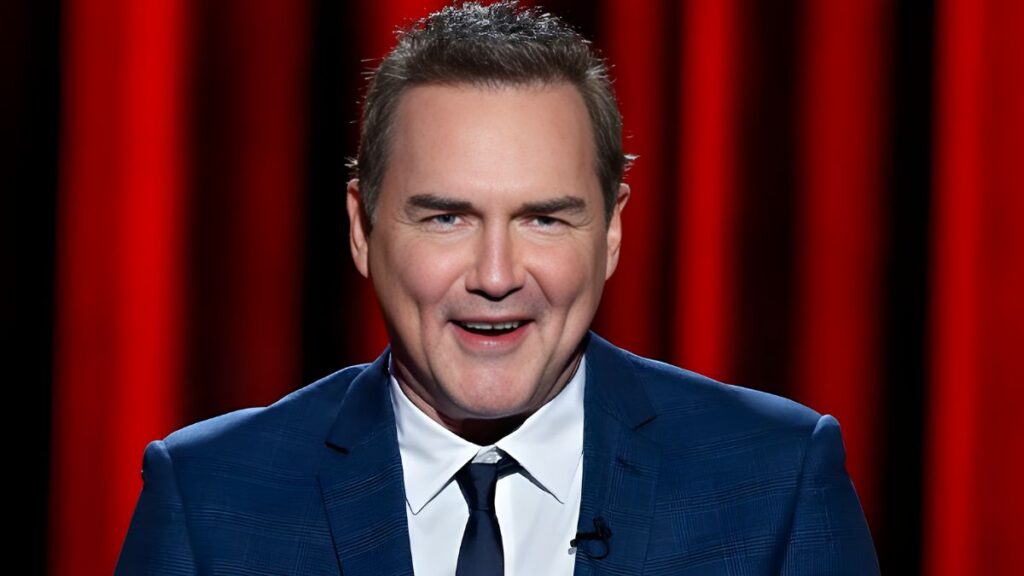
Childhood in Canada
Norman Gene Macdonald was born on October 17, 1959, in Quebec City. His parents, Percy and Ferne, worked as teachers at a military base north of the city. The family spoke English at home even though French surrounded them. Percy made sure the children stayed with English. Summers took Norm and his older brother Neil to a farm in Ontario that Percy had inherited.
Those farm days stuck with him. He later talked about the quiet routines and the people who lived close to the land. The family moved to Ottawa when he reached high school age. He attended Gloucester High School there. School did not hold his interest for long.
He tried Carleton University for a short time but left before finishing any degree. Odd jobs followed. He worked as an insurance underwriter for a while. The paychecks covered rent but left little room for anything else. During those years he started writing jokes on his own. The writing came naturally even if he felt nervous about showing it to anyone.
Breaking Into Stand-Up
In 1985 he walked into Yuk Yuk’s comedy club in Ottawa for an amateur night. The first set did not go well in his own mind. He left the building fast and said he would never return. The club owner talked him back in. After a few more nights the crowds started to respond.
Six months later he landed a spot at the Just for Laughs festival in Montreal. Local papers called attention to his set. He began touring clubs across Canada. The travel meant long drives and cheap motels. He opened for bigger names when the chance came. One early television appearance came on Star Search in 1990. The exposure brought more club dates south of the border.
He started to appear on late-night talk shows. David Letterman had him on several times. The deadpan style caught notice. He told stories that wandered a bit before landing on the punch line. Audiences learned to wait for the twist. By the early 1990s he had enough regular work to think about moving to Los Angeles full time.
Television Writing Gigs
The writing jobs opened doors. In 1992 he joined the staff of The Dennis Miller Show. The late-night program gave him experience putting jokes on paper under deadline pressure. He moved over to Roseanne for the 1992-93 season. The sitcom set taught him how to shape material for a weekly audience. Producers noticed how he handled dialogue that felt offbeat.
Those credits helped when Saturday Night Live started looking for new writers and cast members in 1993. Lorne Michaels brought him in after seeing the stand-up tapes. The jump from writer rooms to live television happened fast. He kept performing club sets on weekends even after the NBC deal came through.
Time at Saturday Night Live
The 1993 season marked his first year on the show. He appeared in sketches and did impressions of figures like Burt Reynolds and Larry King. The following year producers moved him to the Weekend Update desk. He anchored the segment from 1994 until late 1997. The news format let him read headlines and then slip in comments that sounded almost innocent. One running joke involved O. J. Simpson. The trial coverage gave him material week after week.
Viewers waited to hear what he would say next. Some network executives grew uneasy with the tone. Don Ohlmeyer, who oversaw NBC entertainment on the West Coast, pushed for a change. Macdonald left the Update chair in December 1997. He stayed with the cast a few more months before his full exit in March 1998. The departure became public news.
He later said the jokes were not the only reason but admitted the segment had grown experimental. The years on the show brought steady pay. He earned enough to become comfortable yet later revealed that gambling took most of what he saved from those seasons. The experience taught him how quickly a desk job on television could end.
After the Firing
Once the SNL run wrapped he turned to other projects right away. He co-wrote and starred in Dirty Work, a film that came out in 1998. Bob Saget directed it. The cast included Artie Lange and Chris Farley in one of his last roles. The movie followed two friends who started a revenge-for-hire business. It did not set box-office records but gave him a chance to put his own material on screen. He played a version of himself that felt close to the club persona.
The next step came with his own sitcom. ABC picked up The Norm Show in 1999. The series ran for three seasons until 2001. He portrayed a former hockey player doing social work after a tax problem. Laurie Metcalf and Artie Lange appeared as regulars. The show mixed workplace jokes with the kind of slow-burn lines he liked. Ratings stayed modest. The network canceled it after the third season.
During the same period he took small roles in other films. He voiced characters in the Dr. Dolittle series and showed up in movies like Screwed. The work kept him busy but never pushed his earnings into the highest brackets.
Stand-Up and Later Projects
Club dates remained the steady part of his schedule. He released the special Me Doing Stand-Up in 2011. The hour captured his style without much production polish. Another special followed in 2017 called Hitler’s Dog, Gossip & Trickery. He performed long sets that circled around one idea before dropping the payoff. In 2018 Netflix gave him a talk show called Norm Macdonald Has a Show.
The format let guests sit for loose conversations. The episodes ran short and ended when the talk felt done. He also put out a book in 2016. The title Based on a True Story mixed real events with made-up stories. Readers had to sort fact from fiction. The approach fit his habit of stretching a tale until the audience wondered what was coming next. Voice work continued through the 2000s and 2010s. He appeared on Family Guy and The Fairly OddParents. Those checks added to the bank account without requiring long shoots. He kept a house in Los Angeles but never owned a car. The choice kept life uncomplicated. Gambling remained a private matter.
He spoke openly in interviews about losing large sums three separate times. One loss reached four hundred thousand dollars in a single session. The habit started after a big win at a craps table. He said the rush kept pulling him back. The money he did hold onto came from consistent club work and the occasional television check. By the end the net worth settled at the figure that reflected choices made over decades.
Personal Matters
He married Connie in 1988. Their son Dylan arrived in 1992. The couple divorced in 1999. He stayed in touch with his son and spoke about him in a few interviews without giving many details. Family stayed mostly off limits in public talk. His brother Neil built a career in journalism at CBC News. The two kept a close but quiet connection. Norm avoided the Hollywood party circuit.
He preferred quiet nights and long drives between gigs. Health became an issue in the 2010s. He learned he had cancer around 2012 but chose not to tell friends or the public. The decision let him keep working without the extra attention. He continued stand-up dates and podcast appearances through the decade. In 2020 he recorded one final special that Netflix released after his passing. The material touched on everyday topics in the same understated way he always used.
End of the Road
Norm Macdonald died on September 14, 2021. The cause was leukemia. He had fought the disease for nearly nine years in private. News of the death reached the public through his management team. Friends in comedy shared short statements that noted how he kept the struggle hidden. Tributes came from David Letterman, Conan O’Brien, and others who had worked with him.
The funeral stayed small. He left behind a body of work that mixed television sketches, films, and hundreds of club hours. The net worth of $2.5 million stood as the result of earnings minus the gambling losses and the decision not to chase every high-dollar project. His style never changed much from those early nights in Ottawa. The same dry delivery carried through every phase. Some viewers saw the consistency as a refusal to bend for trends. Others simply enjoyed the jokes that arrived without fanfare. The career moved from small stages to network sets and back to clubs again.
Each step added to the total hours on stage. The final count showed a man who treated comedy as a job he showed up for night after night. The $2.5 million number captured the financial side. The hours of material he left behind told the rest of the story.