| Category | Details |
|---|---|
| Full Name | Guns N’ Roses |
| Formed | March 1985 |
| Place of Origin | Los Angeles, California, United States |
| Nationality | American |
| Occupation | Hard Rock Band |
| Years Active | 1985 – present |
| Estimated Net Worth | $390 million (collective among main members as of 2026) |
| Members | Axl Rose (lead vocals), Slash (lead guitar), Duff McKagan (bass), Dizzy Reed (keyboards), Richard Fortus (rhythm guitar), Melissa Reese (keyboards), Isaac Carpenter (drums) |
| Most Known For | Iconic debut album Appetite for Destruction (1987), hits like “Sweet Child o’ Mine”, “November Rain”, “Welcome to the Jungle”, Use Your Illusion albums, and the record-breaking Not in This Lifetime… Tour |
| Latest / Upcoming | World Tour 2026 (North America, Europe, Latin America, Australia/New Zealand/Singapore) |
Guns N’ Roses has put together a collective net worth that sits at $390 million among its main members these days. That total comes from years of strong album sales, tours that packed stadiums, and royalties that keep rolling in long after the records first dropped. It is not just about the big paydays early on.
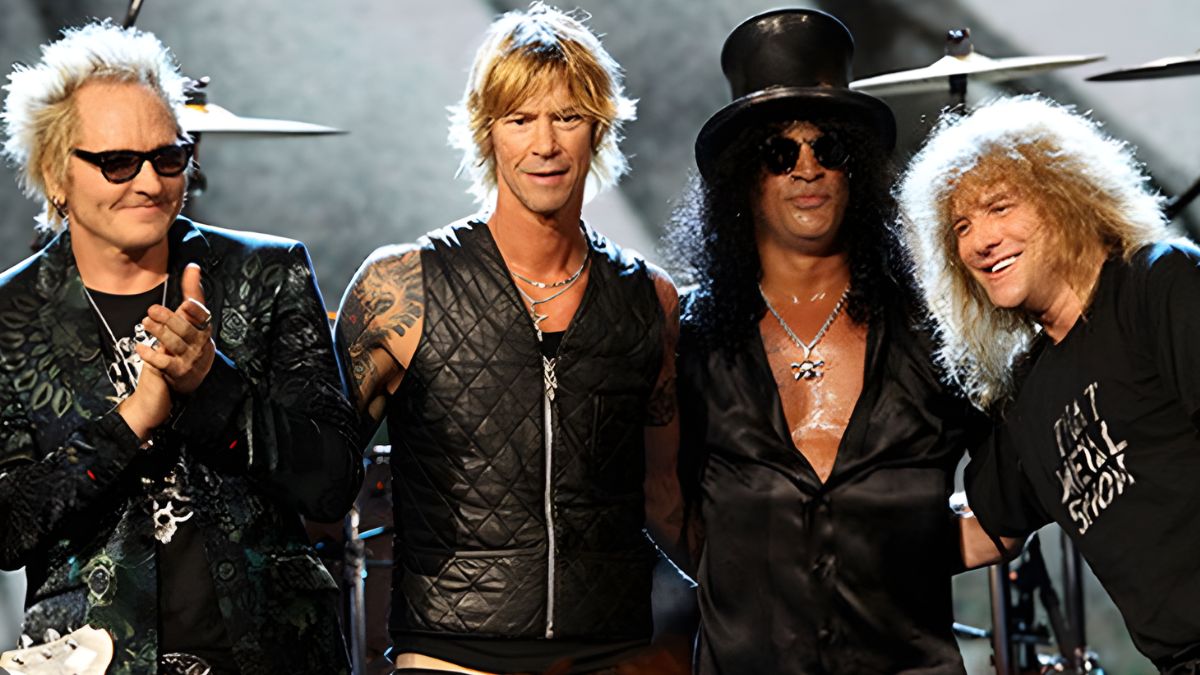
Axl Rose locked down the rights to the name back in the late 1990s, and the recent reunion with Slash and Duff McKagan has driven most of the money that has come in lately. Their move from tiny clubs on the Sunset Strip to filling arenas worldwide is the kind of run that shows how a band that looked ready to fall apart early actually stuck around and turned its own story into something that still pays.
Forming the Band in Los Angeles
It all kicked off in the middle of the 1980s right there in Los Angeles. The music scene was packed with glam metal bands all chasing the same record contracts. Axl Rose and Izzy Stradlin had already been playing together in Hollywood Rose. At the same time Tracii Guns and a few others were working with L.A. Guns. The two outfits came together in March 1985. Someone floated the idea of mashing the names together for a possible label deal, and Guns N’ Roses was born almost on the spot.
The first rehearsals were rough around the edges. Bassist Ole Beich came and went after just a couple of practices. Duff McKagan, who had just moved down from Seattle, jumped in after running into the right people at the right time. Tracii Guns did not last long either. He and Rose had a falling out, which cleared the way for Slash. Slash already knew McKagan and Stradlin from around town. By June 1985 Steven Adler had joined on drums and the five-piece lineup was set.
They started out playing the regular Hollywood club circuit. The shows were loud and unpredictable, and word spread fast about the raw energy they brought to the stage. Geffen Records signed them in March 1986 with a $75,000 advance. The band turned down a bigger offer from another label because they wanted to keep control over how the music sounded. Their first official release came later that year with the EP Live ?!@ Like a Sui*cide. Only 10,000 copies were pressed at first. It mixed a few studio tracks with crowd noise that was added later to give it that live feel.
The EP did not fly off the shelves right away, but it caught the attention of people inside the industry. Those early days were mostly about getting by. The guys lived on floors, split whatever money came in from gigs, and relied on the label to cover the basics so they could keep working. Executives at the time liked the attitude because it cut through all the polished hair metal that was everywhere on the radio. That same edge would end up feeding into songs that felt real to fans who were fed up with the usual formulas.
Appetite for Destruction Changes Everything
The real shift happened when Appetite for Destruction came out in July 1987. Sales started slow until MTV began playing the “Welcome to the Jungle” video late at night. Once that happened the album took off and never really slowed down. It has sold more than 30 million copies around the world, with 18 million of those in the United States alone. It still holds the record as the best-selling debut album in U.S. history and spent weeks at the top of the Billboard 200. “Sweet Child o’ Mine” reached number one, while “Paradise City” and “Welcome to the Jungle” owned rock radio and video channels for months. The band hit the road for the Appetite for Destruction Tour. They opened for bigger acts at first, then moved up to headlining their own shows across the United States, Europe, Australia, and Japan. The whole run stretched out over 16 months.
Those tours laid down the first solid layer of money. Ticket sales and the jump in album revenue gave each member their first real checks, even if a lot of it went straight back into keeping the tour going and covering the kind of lifestyle that comes with sudden attention. Royalties from the record have kept paying out ever since. In 1988 the band put out G N’ R Lies. It combined leftover tracks from the EP with some new acoustic songs and moved another 10 million copies worldwide.
The album hit number two on the charts and gave them another solid hit with “Patience.” The acoustic material proved they could change direction without losing the crowd. That helped keep merchandise and ticket demand steady. By the end of the decade they had moved from clubs to arenas, and the money from those first two releases gave them room to take bigger swings later on.
The Use Your Illusion Era and Growing Pains
The early 1990s brought the band’s biggest commercial run, but it also introduced problems that would stick around. Steven Adler was let go in 1990 after his drug issues kept getting in the way. Matt Sorum stepped in on drums. Keyboardist Dizzy Reed joined at about the same time and helped open up the sound for what came next. In September 1991 the band dropped Use Your Illusion I and Use Your Illusion II on the same day. The albums landed at numbers two and one on the Billboard 200, something that does not happen often.
Together they have sold more than 35 million copies around the world. Songs like “November Rain,” “Don’t Cry,” and “You Could Be Mine” became radio staples. The videos that went with them were some of the most expensive ones made at the time. The Use Your Illusion Tour ran for 28 months and covered 192 shows in 27 countries. More than seven million fans turned out. It set attendance records and brought in millions in gross revenue on each leg, though the exact split after promoters and production costs was never laid out in public detail.
The tour had its share of headaches. Riots started at a few stops, including the 1991 Riverport show in Missouri that ended with a $50,000 fine for Rose and probation after he jumped into the crowd. A show in Montreal got cut short and sparked more trouble. Izzy Stradlin left toward the end of 1991 because the whole atmosphere had become too much. Gilby Clarke took his place. Each change brought legal paperwork and settlements with former members. Even with all that, the albums and the tour kept the money coming. That period made it clear the band’s ability to draw a crowd could carry them through the off-stage chaos. It was a point they would lean on again years later when the original members got back together.
Navigating the 90s and Beyond
Once the Use Your Illusion run wrapped up in 1993 the band released The Spaghetti Incident? the following year. It was a set of punk covers that opened at number four on the charts and sold over a million copies in the United States. A hidden track written by Charles Manson caused a public backlash, so the band ended up donating those royalties to the victims’ families. The album basically closed the book on the classic lineup. Slash, McKagan, and the others started drifting away through the mid-1990s over creative differences and personal matters. Rose stayed put and made sure he held full rights to the Guns N’ Roses name by 1997. That gave him the ability to keep recording and touring under the banner even with a changing cast of musicians.
The next ten years or so were quieter when it came to new albums. The 2004 Greatest Hits compilation sold more than six million copies in the United States and stayed on the Billboard 200 longer than almost any other album. It brought in steady money without requiring fresh material. Touring happened in fits and starts, but each run still turned a profit and kept the name out there. Rose spent the time working on new songs while cycling through guitarists like Buckethead and later Bumblefoot. Those years tested whether the band could last, but the back catalog and occasional live dates made sure the income did not dry up. By then a lot of veteran rock bands were learning that live shows had become the main paycheck as album sales dropped industry-wide. Guns N’ Roses moved in that direction earlier than most.
The Chinese Democracy Project
Work on Chinese Democracy began in the mid-1990s and dragged on for more than a decade. The album finally landed in November 2008 after production costs that reached about $14 million, which made it one of the priciest rock records ever. A long list of musicians came and went, and the finished product mixed hard rock with industrial and electronic touches. It debuted at number three on the Billboard 200 and sold roughly 2.6 million copies worldwide. The numbers were not what the earlier albums had done, but it still added to the catalog and gave Rose a reason to keep the band active. Geffen had pulled extra funding partway through, so Rose covered a lot of the final costs himself.
The long wait turned into its own piece of band history. Fans and critics argued back and forth about whether it had been worth it. Looking at it from the business side, the whole process showed the downside of taking too long in an era when digital releases were speeding everything up. Still, the album did okay and the tours that followed kept revenue moving. The Chinese Democracy Tour stretched from 2001 into 2011 with different lineups. They played arenas and festivals and held onto the live income that had become the group’s biggest earner. The crowds were smaller than in the peak years, but they were still solid enough to prove the Guns N’ Roses name carried weight even without the original guitarists.
The Reunion That Redefined Their Legacy
The money picture changed for good in 2016 when Slash and McKagan came back for the Not in This Lifetime… Tour. It started with a pair of Coachella shows and grew into a worldwide run that lasted until 2019. The tour played 158 shows, took in $584.2 million, and sold more than 5.3 million tickets. It landed among the highest-grossing tours ever, with many nights averaging over $3 million after the early legs. Capacity hit 96.8 percent in a lot of markets. Fans were clearly ready to pay top dollar to see the classic members share the stage again. Merchandise added extra income, though the band never released exact figures on that side.
The tour numbers pushed the members’ earnings higher and made it possible to keep touring in the years after, including later runs in 2021 through 2025 and plans for a full world tour in 2026. New singles started coming out between 2021 and 2025—“Absurd,” “Hard Skool,” “Perhaps,” “The General,” “Nothin’,” and “Atlas.” Many of them came from old Chinese Democracy sessions. The tracks kept the catalog active and brought in streaming and download money. Reissues helped too. A deluxe version of Appetite for Destruction arrived in 2018, and a big Use Your Illusion box set followed in 2022. Fans who wanted the expanded editions opened their wallets again.
The reunion also changed how the band worked on stage. With Slash and McKagan back the shows had the old chemistry that had defined the early years. That showed up in stronger ticket sales and better reviews. People who follow the music business have noted that using nostalgia while still controlling new releases has become a standard move for older rock acts. Not many have pulled it off at the level Guns N’ Roses managed. The tour money helped clear any leftover costs from past legal issues or production overruns and locked in the current financial standing.
Current Standing and Future Prospects
Heading into early 2026 the band is still on the road with the current lineup. Axl Rose, Slash, and Duff McKagan are joined by rhythm guitarist Richard Fortus, keyboardists Dizzy Reed and Melissa Reese, and drummer Isaac Carpenter, who stepped in after Frank Ferrer left in March 2025. Recent sets have mixed their own hits with covers of Black Sabbath songs. The 2026 world tour was announced late in 2025, so live dates remain the focus. The full catalog has now moved more than 100 million copies worldwide. That keeps the royalty checks coming even when things slow down between tours. Streaming numbers for the biggest tracks add to the total, but the road is still where most of the current income is made.
The group has adjusted to the way the music industry works now. Album sales used to be the main driver. These days tours and the value of the old catalog keep things steady. The members have also spread out into other areas. Slash has kept up a busy solo career. McKagan has written books and looked into finance investments. Rose has tried voice work and even a graphic novel project. Those side efforts help balance risk and build personal wealth on top of what the band brings in. Older legal matters, like royalty disputes and lawsuits with former associates, have mostly been wrapped up. That leaves the focus on whatever comes next.
The way the band has lasted through lineup changes, long gaps between records, and plenty of public noise while still selling out stadiums says something about how few groups from that era have managed the same thing. Their story has not been a straight line up. It has had highs, lows, and comebacks that each added something to the bottom line in its own way. With tours still rolling and a catalog that keeps selling, the financial side looks stable for the long haul. Guns N’ Roses took a messy rock-and-roll ride and turned it into something that lasts. The numbers prove they made it pay off.