BTS has grown into one of the biggest commercial forces in music over the past decade. Their reach has quietly changed the way the entertainment business works on a global scale. By early 2026 the seven members are back together after finishing their military service. They dropped the new album Arirang in March and rolled out a world tour that insiders expect to pull in more than $1 billion before the final numbers are tallied. The story goes beyond topping charts and filling stadiums.
It is really about the way they built lasting financial strength through keeping creative control, making smart business choices, and forging a connection with fans that few acts can match. Estimates put the group’s combined net worth at $600 million. The money comes from music royalties, tour earnings, brand partnerships, merchandise lines, and their investments, including sizable shares in parent company HYBE. The total shows years of steady, deliberate growth instead of a sudden windfall.
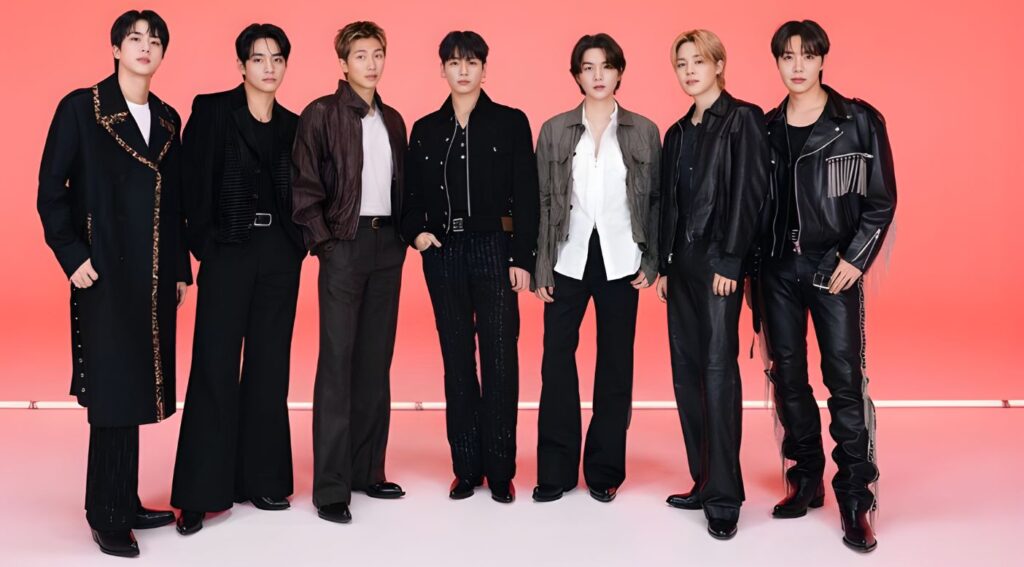
The Early Days in a Small Agency
The group started life inside Big Hit Entertainment, which was still a modest outfit next to the big South Korean labels at the time. Work began around 2010 when founder Bang Si-hyuk put the lineup together around underground rapper RM, who signed on first. Suga and J-Hope joined not long after, drawn by the chance to keep real artistic freedom rather than follow the usual polished idol template. Training was intense but built differently.
The members wrote most of their own lyrics and got involved in production right away, a move that would matter a lot once royalties started rolling in. They made their official debut on June 13, 2013, with the single album 2 Cool 4 Skool and the track “No More Dream.” The music video and their first M Countdown performance showed a raw edge that spoke directly to young people’s struggles and ambitions, and that set them apart from the start.
The first twelve months brought solid but still modest results at home. They followed up with O!RUL8,2? in September and Skool Luv Affair the next year. That second album topped local charts and gave them their first real Billboard World Albums entry at number three. Even so, money was tight for the young company. Big Hit ran on limited funds, so early tours stayed close to Asia. The 2014 BTS Live Trilogy Episode II: The Red Bullet kicked off in October and wrapped in December, hitting smaller venues across the region and giving the guys their initial taste of life on the road.
Album sales sat in the hundreds of thousands rather than the millions, and streaming numbers grew gradually through YouTube. The members shared a dorm, practiced late, and juggled school schedules with promotions. Those early years created the base for everything that came later. By keeping songwriting credits on almost every track, they locked in a reliable stream of publishing income that would keep adding up as their catalog expanded.
Rising Through Youth and Self Expression
Momentum picked up noticeably in 2015 once The Most Beautiful Moment in Life, Part 1 arrived. Lead single “I Need U” cracked the top five on domestic charts and picked up several music-show trophies. “Dope” followed, passed 100 million YouTube views, and opened the door to a bigger audience. The companion Part 2 album pushed them higher, landing at number 171 on the Billboard 200, their best showing so far.
The full-scale tour 2015 BTS Live The Most Beautiful Moment in Life On Stage sold out three nights in Seoul and then moved across Asia. Merchandise started selling better at those shows as the ARMY fan base grew both in size and loyalty. By the end of the year, combined album sales in South Korea had reached several hundred thousand copies and delivered meaningful revenue for the label and the members under their profit-sharing arrangement.
Global Breakthrough and Stadium Tours
The real breakthrough came in 2017 with the Love Yourself era. Her arrived in September carrying “DNA,” which entered the Billboard Hot 100 at number 85, the highest spot any K-pop group had managed up to then. The “Mic Drop” remix with Desiigner climbed to number 28 and earned RIAA gold. Their American Music Awards performance that November cemented their foothold in the U.S. market. Love Yourself: Tear followed in May 2018 and debuted at number one on the Billboard 200, the first K-pop album ever to do it. “Fake Love” cracked the top ten on the Hot 100. The follow-up Answer came in August and brought “Idol,” which also went platinum.
The accompanying world tour started in arenas and quickly moved into stadiums. Love Yourself: Speak Yourself pulled in roughly $246 million from sixty-two shows and sold nearly two million tickets across Asia, Europe, and North America. Pollstar figures showed it was one of the highest-grossing tours ever by a non-English-language act at that point. Merchandise per show added healthy extra income through light sticks, albums, and clothing.
After production costs, the members took home about seventy percent of the concert revenue. At the same time, endorsement deals started arriving in volume. The group signed multi-year contracts with major brands that brought in tens of millions each year. One industry breakdown from that period put their commercial earnings alone at $55 million in a single twelve-month stretch.
By 2019 Map of the Soul: Persona landed with “Boy With Luv” featuring Halsey. The single reached number eight on the Hot 100 and topped charts in several countries. The tour extension took them to Wembley Stadium and the Rose Bowl, making BTS the first Asian act to sell those venues out completely. Each of these steps translated straight into bigger bank accounts.
Catalog streams climbed into the billions, so royalty checks grew substantially. HYBE, the company formerly known as Big Hit, was getting ready for its stock-market listing, and the members received equity stakes that would gain real value later. Their combined holdings in the company, roughly sixty-eight thousand shares each for several of them, sat between $14 million and $19 million apiece by late 2025, depending on how the share price moved.
Navigating the Pandemic and Solo Expansions
The early 2020s brought fresh hurdles and new openings. Map of the Soul: 7 came out in February and performed strongly, but the planned tour had to be postponed because of COVID-19. The group shifted to online concerts such as Bang Bang Con and later Map of the Soul ON:E. “Dynamite” dropped in August and became their first Hot 100 number one while topping the Global 200. “Butter” and “Permission to Dance” followed in 2021 and each hit the top spot too. “My Universe” with Coldplay gave them a sixth chart-topper, something most acts never come close to. Those singles poured in huge streaming revenue and kept the brand visible while everyone was stuck indoors.
Solo work also started in earnest during this stretch. Suga, releasing as Agust D, put out mixtapes and later the D-Day album that supported its own successful tour. Jungkook released the single “Seven” then the full album Golden, both of which sold millions and landed him global campaigns including Calvin Klein. V dropped Layover, mixing jazz and pop in a way that pulled in new listeners. Jimin scored a Hot 100 number one with “Like Crazy.”
J-Hope toured behind his solo material, while RM and Jin explored their own creative lanes. These projects added millions to each member’s personal net worth and kept the overall BTS brand active even without group promotions. Across all BTS and solo releases, physical album sales in South Korea alone have topped forty million copies historically. Global equivalent album sales now sit above 143 million units according to tracking services.
Merchandise lines such as BT21 and TinyTAN kept performing well through online shops and pop-up stores. Licensing deals for games and other collaborations widened the revenue base beyond music. In the same period the members began buying real estate in South Korea and overseas, properties that have appreciated nicely. Their HYBE stock positions also grew as the company pushed into international markets, giving them a solid asset class separate from touring money.
The Military Hiatus and Continued Momentum
Mandatory military service rolled out in stages starting late 2022, with Jin going first. Full group activities paused, but the members stayed visible through solo releases and reissues. The 2022 anthology Proof gave fans a career overview and posted strong sales. Discharges happened on staggered dates, the last ones coming in mid-2025. While the group was away, HYBE still reported revenue growth from its other artists and the Weverse platform, yet analysts kept noting that the absence of BTS weighed on certain quarterly profits. The broader economic impact of the group on South Korea has been valued in the billions each year through tourism, exports, and cultural soft power.
Solo projects during the hiatus proved the members could hold their own without the group name. Jungkook fronted major global campaigns and released music that charted worldwide. Suga wrapped an Agust D world tour that brought in tens of millions. Jin set records for Asian soloists with his own tour, grossing more than $32 million across eighteen dates and drawing over 200,000 fans. Those numbers went straight into personal wealth.
Brand work never slowed; members kept representing luxury houses and global corporations. V teamed with Celine, Jungkook stayed with Calvin Klein, and the others held deals with Dior, Gucci, and Bottega Veneta. Each contract delivered multi-million-dollar yearly pay plus bonuses tied to social-media reach and sales performance.
The 2026 Comeback A New Chapter in Success
Reunion work began picking up speed in 2025 once everyone was discharged. The members appeared together on Weverse in July and confirmed new music was coming. Arirang landed on March 20, 2026. The lead single “Swim” helped first-day sales top 3.9 million copies, and streaming passed 110 million plays on major platforms inside the first twenty-four hours. The album launch came with news of the ARIRANG world tour, initially set for seventy-nine dates in thirty-four cities with room for extensions.
Early projections put ticket revenue alone at $664 million based on average prices and expected attendance near four million fans. Add in merchandise, sponsorships, and other income, and the total gross could push past $1 billion. After production costs estimated around sixty-five percent and taxes, the net amount heading to the group should land in the hundreds of millions, split among the seven.
This return underlines the financial model that has worked so well for them. Concert money has always been the biggest slice, followed by recorded music and endorsements. The 2026 tour builds on earlier successes while using newer tools such as improved streaming and deeper fan experiences on Weverse. HYBE stands to benefit too, with forecasts pointing to record yearly revenue partly because BTS is back. The members still hold their equity stakes, which keep delivering passive income through dividends and any share-price gains.
Unpacking the Wealth Sources and Individual Contributions
Music royalties sit at the core. With more than 143 million equivalent album sales worldwide, the catalog keeps generating income from streams, downloads, and reissues. Because they produce and write so much themselves, the members capture a bigger royalty share than most peers. Touring remains the single largest earner. Previous world tours have grossed hundreds of millions combined, and the current run looks set to raise the bar again. Merchandise and licensing provide steady extra revenue, with fans spending noticeable amounts on apparel and collectibles at each show.
Endorsements have spread the wealth further. Group contracts with electronics and car brands sit alongside individual luxury deals. Commercial work alone brought in $55 million in one reported year. Real-estate holdings give stability; the members own properties that serve both personal needs and long-term investment. HYBE shares form another major asset. Each holds stakes valued between $14 million and $19 million depending on exact share count and current market price, putting all seven among South Korea’s younger high-value shareholders.
Individual estimates for early 2026 put V at roughly $40 million, helped by the success of Layover, acting roles, and premium brand work. Jungkook sits around $35 million, lifted by Golden sales, worldwide endorsements, and his solo tour. J-Hope and Suga each hover near $30 million, reflecting solid solo album and tour results plus production credits. RM lands between $22 million and $50 million depending on investment performance, with songwriting royalties forming a big part. Jimin and Jin complete the list with figures in the $20 million to $45 million range, backed by chart-topping solo releases and ongoing endorsements.
These numbers come from public financial filings, sales data, and industry analysis. They do not include future earnings from the current tour or any new projects still to come. What stands out is how balanced the approach has been. The group has never leaned on a single revenue stream; instead they have layered music, live shows, branding, and investments.
Challenges Overcome and Lessons in Longevity
The road has not been smooth. Early cash shortages at Big Hit tested everyone’s resolve. The pandemic forced a full pivot to virtual events, yet album sales and digital numbers held up. Military service meant a multi-year break that could have hurt a lesser act, but the solo output kept the spotlight on. Contract renewals between 2023 and 2026 showed both sides wanted to stay together.
ARMY’s role cannot be overstated. The fan community drives organic promotion, which lifts streams and ticket demand without the group having to spend proportionally on marketing. That loyalty turns into reliable revenue. At the same time the members have handled public pressure and cultural demands while making mental health and creative honesty priorities, moves that have protected their long-term appeal.